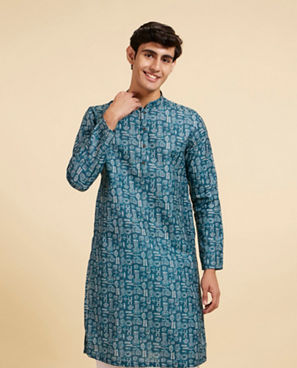
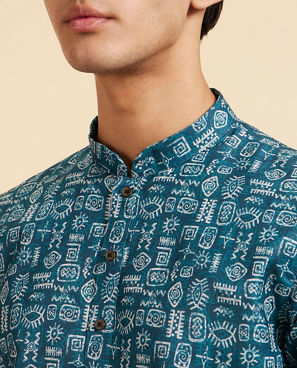
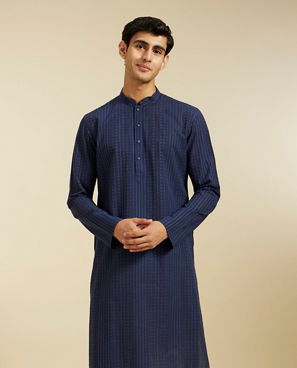
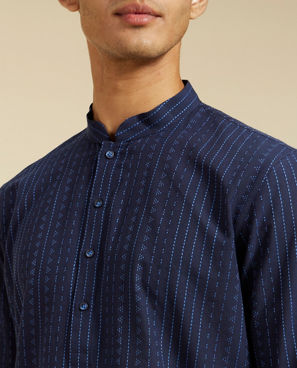
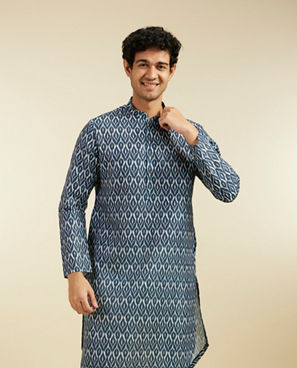
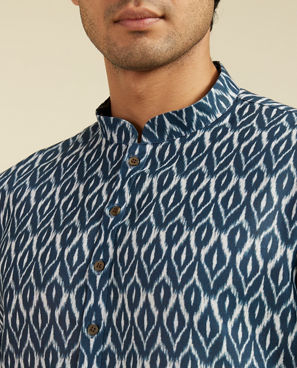
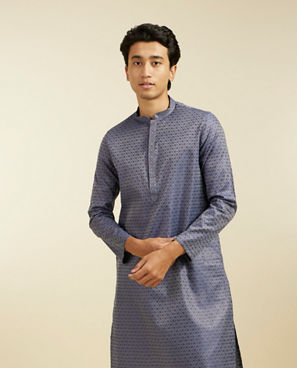
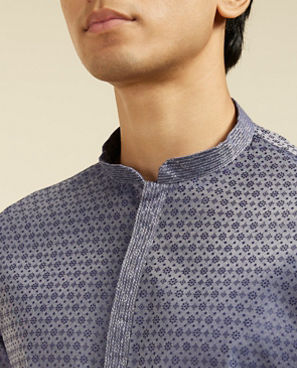
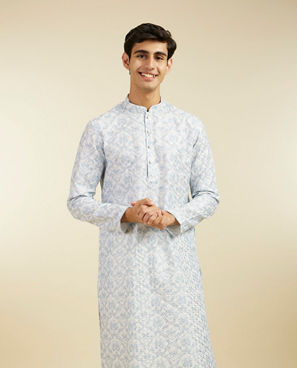
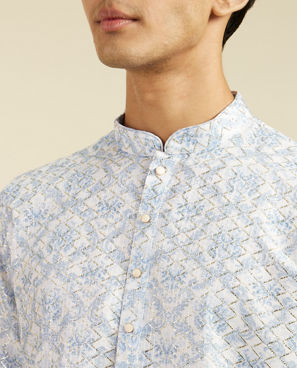
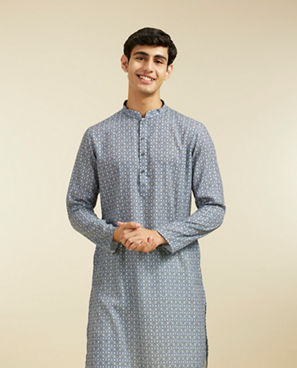
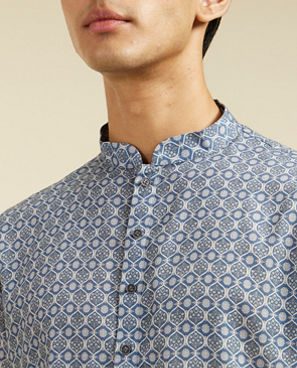
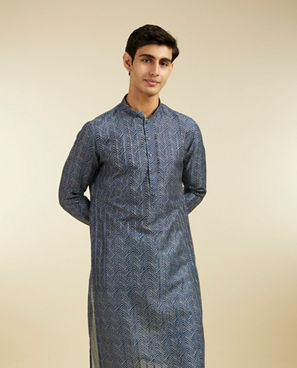
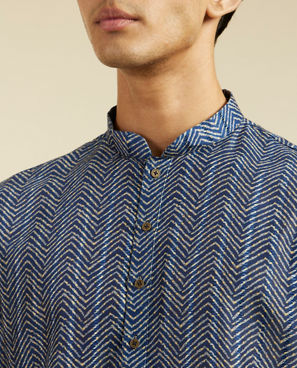
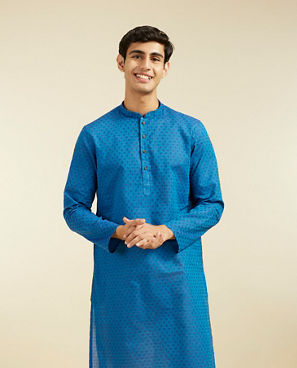
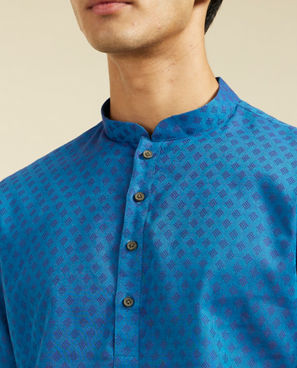
Blue Printed Kurtas for Men – Where Colour Meets Craft, Every Single Time
There is something about a well-printed kurta that a solid colour simply cannot replicate. A print brings movement, narrative, and personality to a garment — it turns fabric into something that tells a story. And when that print is built on a blue base, the result is a combination that draws from one of India's deepest textile traditions and delivers it in a form that feels entirely contemporary.
India's Printing Legacy and the Blue Connection
To wear a blue printed kurta is to participate in a textile tradition that stretches back centuries. India's relationship with blue and print is one of the most storied in global textile history. The indigo-dyed block prints of Rajasthan — particularly from Bagru and Sanganer — have been practised for generations, producing fabrics of extraordinary depth and pattern in blue tones that range from soft powder to deep midnight. Ajrakh printing from Kutch and Sindh uses natural indigo dyes to create complex geometric and floral patterns with a cultural resonance that is deeply significant. Kalamkari — the hand-painted and block-printed textile tradition of Andhra Pradesh and Telangana — frequently employs blue tones in its intricate narrative patterns drawn from mythology and nature.
The Print Vocabulary
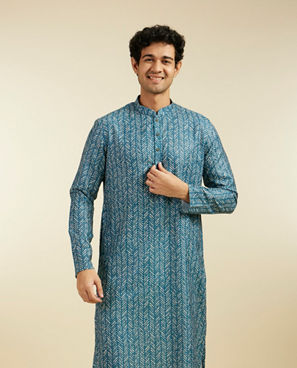
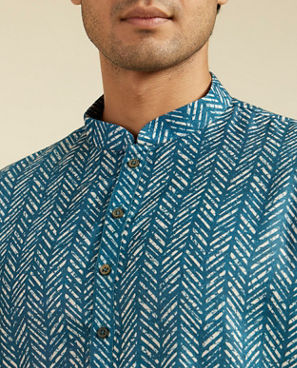
The world of blue printed kurtas encompasses an enormous range of print styles — and understanding this vocabulary helps you choose a kurta that genuinely reflects your personal aesthetic. Floral prints on a blue base are among the most popular and enduring choices — whether large, bold blooms or delicate scattered petals, florals on blue carry a freshness and vitality that suits a wide range of occasions and age groups. Geometric prints — stripes, checks, lattices, and abstract angular patterns — give the kurtas a more structured, contemporary character that works particularly well for smart-casual settings. Paisley and boteh prints on blue are among the most classically Indian print combinations available — the curved, teardrop motif has a cultural depth that feels both traditional and perpetually relevant. Abstract and digital prints on blue push the boundary between ethnic wear and contemporary fashion — bold, graphic, and visually dynamic, these are prints for men who want their kurta to make a confident, forward-looking statement.
Blue as a Print Base: Why It Works So Well
Blue is one of the most effective base colours for printed kurtas — and the reasons extend beyond simple aesthetic preference. Blue's natural versatility across its spectrum means that prints can be executed in a wide range of tonal combinations without losing coherence.
White prints on blue create a crisp, clean contrast that reads clearly from a distance and up close. Earth tones — ochre, rust, terracotta — on blue create a warm, organic combination that is particularly associated with traditional block printing traditions. Gold and metallic prints on deeper blues — royal and navy — have a festive richness that elevates the printed kurta towards celebration territory. Multi-colour prints on a blue base use the blue as a grounding element that prevents the overall design from feeling chaotic — the blue anchors the other colours, creating a print that feels balanced and considered rather than overwhelming.
Occasions to wear
The occasion-appropriateness odepends significantly on the print's density, colour contrast, and overall visual energy. For casual everyday occasions — a relaxed family lunch, a weekend outing, a college event — a lightweight cotton kurta with a simple floral or geometric print is effortlessly well-dressed without requiring any additional effort. For festive occasions like Eid, Navratri, or Diwali, a more vibrant or densely printed blue kurta in a slightly richer fabric creates a look of joyful, occasion-appropriate energy. For mehndi and haldi functions, bold blue prints bring the colour and personality that these celebrations actively encourage. For casual wedding functions and pre-wedding gatherings, a well-chosen kurta styled with clean neutral bottoms and good footwear creates a look that is distinctive, considered, and genuinely memorable. Even for semi-formal events and cultural occasions, the right kurta — neither too casual nor too elaborate — finds a natural home.
Fabrics That Carry Prints Best
The fabric on which a print is executed has a significant impact on how the print reads and how the garment performs. Cotton is the most natural and widely used base fabric — the matte surface allows print colours to appear with maximum clarity and vibrancy, and the fabric's texture adds an honest, artisanal quality that suits traditional print styles particularly well. Linen gives blue prints a slightly rougher, more organic surface — the texture creates an interesting relationship with the print, particularly for block print and hand-crafted motifs where a degree of imprecision is part of the aesthetic. Georgette and chiffon bases give blue prints a softer, more fluid quality — the fabric's drape allows the print to move gracefully with the body, creating an elegant effect that is particularly well-suited to floral and abstract prints. Cotton-silk blends give blue prints a subtle sheen that elevates the fabric's appearance towards semi-formal territory while retaining much of cotton's breathability and ease of maintenance.
Keeping the Balance Right
The visual energy of this kurta means that styling requires a thoughtful, restrained approach — the print is the focal point, and everything else should support rather than compete with it. White and ivory churidars or straight-cut trousers are the most universally effective pairing — the clean neutrality of the bottom wear allows the print to take complete ownership of the look. Off-white and cream bottoms offer a warmer version of the same logic, adding a softness that suits deeper or warmer-toned blue prints particularly well. Avoid heavily patterned or brightly coloured bottom wear — the combination of a printed kurta and patterned bottoms almost never works. For footwear, simple leather juttis in tan or brown, classic kolhapuris, or clean white sneakers for a more contemporary casual look are all appropriate choices depending on the occasion. Accessories should be minimal — a simple watch, a single bracelet, or a understated chain is enough when the kurta is already carrying a print.
Matching Shade to Story
The shade of blue in a printed kurta shapes its entire character — and choosing the right tone for your aesthetic and occasion is key to wearing it well. Light blue kurtas — in powder, sky, or cornflower — carry a freshness and lightness that suits casual daytime occasions and summer settings naturally. The prints on these lighter bases tend to feel more delicate and approachable. Mid-tone blue kurtas — cobalt, bright blue, or teal-adjacent shades — carry more energy and visual confidence, making them excellent choices for festive occasions and events where the outfit needs to make a presence. Deep blue kurtas — in royal blue, indigo, or navy — carry the most gravitas and formality, and the prints on these darker bases tend to read with a richness and depth that is well-suited to evening celebrations and more formal gatherings.
Choosing your shade with the occasion in mind ensures the kurta you wear feels entirely right in its context.
Maximum Value, Minimum Effort
Because blue prints pair reliably with neutral bottom wear — the same white churidars, the same ivory trousers, the same set of neutral accessories — multiple blue printed kurtas can be built around a shared set of supporting pieces. A light floral print for casual occasions, a bold geometric or abstract print for festive events, and a traditional block print for cultural and heritage-themed settings together cover the full occasion range with a single, cohesive colour story. The blue thread running through all three creates a wardrobe that feels curated rather than assembled — the kind of collection that makes getting dressed for any occasion straightforward, enjoyable, and consistently well-executed.
The Camera Loves a Blue Print
Blue printed kurtas are among the most photogenic garments in Indian ethnic menswear — and the combination of a strong colour base with an interesting surface pattern is the central reason why. In natural light, blue prints photograph with a vibrancy and clarity that makes the garment leap off the frame — the colour's inherent photogenicity is amplified by the visual complexity of the print. In warm artificial lighting — the standard for indoor festive and wedding photography — deeper blue prints glow with a richness that translates beautifully to both digital and print formats. For social media content, reels, and lifestyle photography, it creates images with immediate visual interest and cultural authenticity. The print provides the texture and movement that solo colour photographs sometimes lack, making every shot more dynamic and more compelling. A Diwas kurta, shot in good light against a clean backdrop, requires nothing more than a confident stance and genuine joy to create content worth sharing.
Frequently Asked Question (FAQs)
1. What type of print works best on a blue kurta for everyday wear?
For everyday casual wear, subtle geometric prints, simple floral patterns, or traditional block print motifs in white or earth tones on a light to mid-tone blue base work best. These prints are visually interesting without being overwhelming, making the kurta appropriate for a wide range of casual settings — from family gatherings to relaxed outings — without requiring elaborate styling.
2. Can a blue printed kurta be worn to a wedding function?
Yes, particularly for pre-wedding functions, mehndi ceremonies, and casual daytime wedding events. Choose a bolder, more richly printed kurta in a deeper blue shade and pair with clean neutral churidars and good footwear. For more formal wedding functions, a kurta in a slightly richer fabric — cotton-silk blend or chanderi — with a more refined print design is appropriate and distinctive.
3. How do I style a blue printed kurta to avoid the outfit looking too busy?
The key is contrast and restraint in the supporting elements. Always pair a printed kurta with solid, neutral bottom wear — never a patterned bottom with a printed top. Keep footwear simple and accessories minimal. Let the print carry the visual interest of the outfit entirely, and ensure everything else is clean, well-fitted, and unobtrusive.
4. Are block printed blue kurtas still relevant in contemporary ethnic fashion?
Absolutely. Block printed blue kurtas are experiencing a significant resurgence in contemporary Indian ethnic fashion, driven by growing appreciation for handcrafted and artisanal garments. The combination of traditional technique and the timeless appeal of blue makes block printed kurtas one of the most relevant and culturally resonant choices in men's ethnic wear today.
5. What is the best bottom wear colour for a bold blue printed kurta?
White and ivory are the most universally effective pairings for bold blue printed kurtas — the clean, neutral contrast allows the print to dominate the visual field without competition. Off-white and cream work equally well for a slightly warmer pairing. Avoid other colours entirely when the print is bold — the goal is to let the blue print lead with complete confidence.

_18-04-2025-19-42:297-368)
_18-04-2025-19-42:297-368)
_18-04-2025-19-42:Swatch)
_18-04-2025-18-18:297-368)
_18-04-2025-18-19:297-368)
_18-04-2025-18-18:Swatch)
_18-04-2025-22-40:Swatch)
_28-04-2025-06-53:297-368)
_18-04-2025-23-10:297-368)
_28-04-2025-06-53:Swatch)