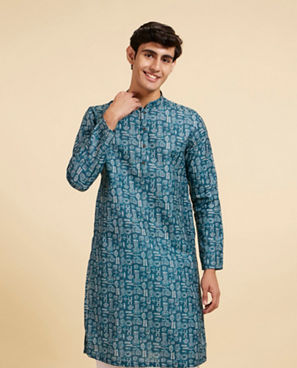
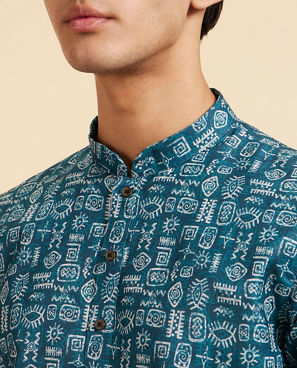
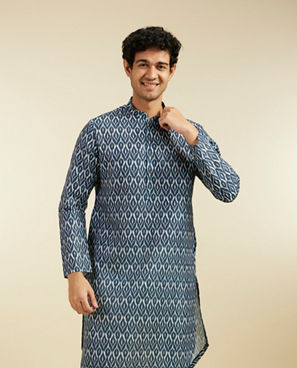
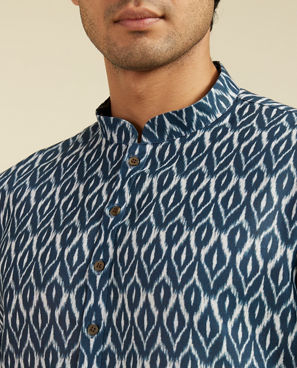
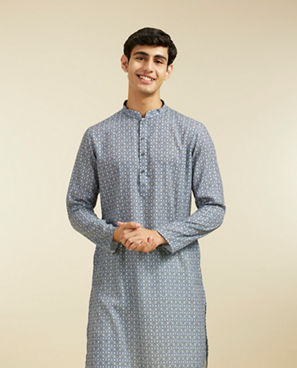
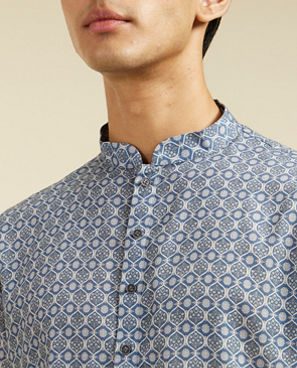
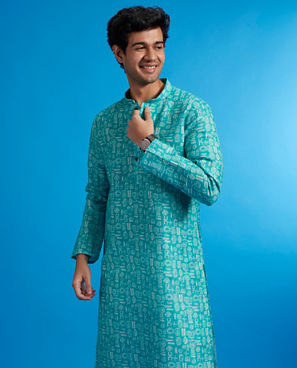
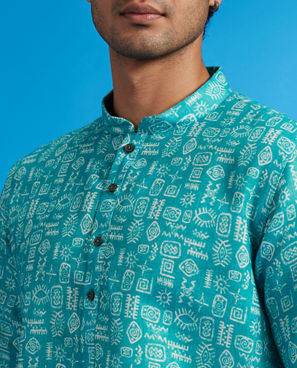
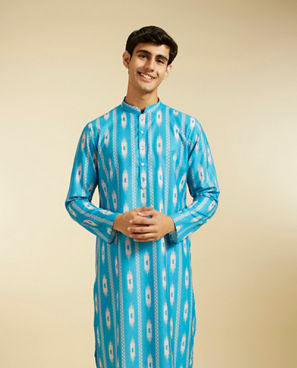
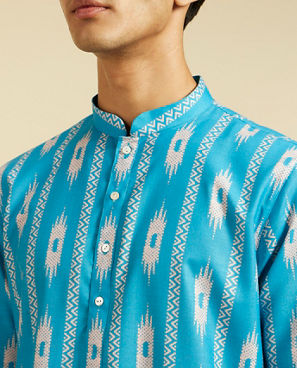
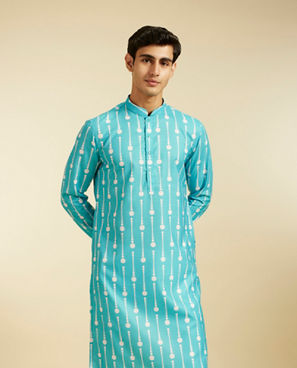
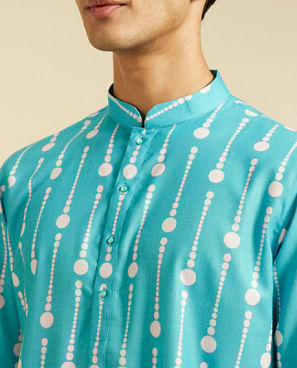
Blue Cotton Kurtas for Men – Effortless, Everyday and Always Right
If there is one colour that has earned an unconditional place in every wardrobe — ethnic or otherwise — it is blue. Reliable without being boring, versatile without being generic, blue carries a breadth of character that no other colour quite replicates. From the softest powder blue to the deepest navy, the spectrum is vast and the options are genuinely exciting.
Blue in Indian Textile Tradition: A Colour With Deep Roots
Blue has been present in Indian textile culture for millennia — its history inseparable from the story of indigo, one of the most significant natural dyes the subcontinent has ever produced. India was once the world's primary source of indigo dye, and the deep, rich blues it produced were traded across the ancient world and prized by cultures from Egypt to England. This heritage gives blue an almost elemental connection to Indian fabric and craft — it is not an imported aesthetic but a deeply indigenous one.
From the block-printed blues of Rajasthan to the woven indigo textiles of Gujarat, from the resist-dyed fabrics of Andhra Pradesh to the contemporary digital prints of modern ethnic wear — blue in Indian cotton is a tradition with extraordinary depth. A blue cotton kurta from Diwas is, in this sense, part of a much longer story.
The Blue Spectrum: Finding Your Shade
One of the most exciting aspects of blue cotton kurtas is the sheer range of shades available — and how differently each one reads in terms of occasion, mood, and personal style.
-
Powder blue and sky blue are the lightest end of the spectrum — fresh, airy, and naturally suited to daytime occasions, summer events, and casual settings where a gentle, approachable aesthetic is the goal.
-
Cornflower blue and cobalt sit in the mid-range — vibrant, confident, and versatile enough to move between casual and semi-formal settings with ease.
-
Royal blue carries a deeper, more commanding presence — appropriate for festive occasions and semi-formal events where a stronger colour statement is welcome.
-
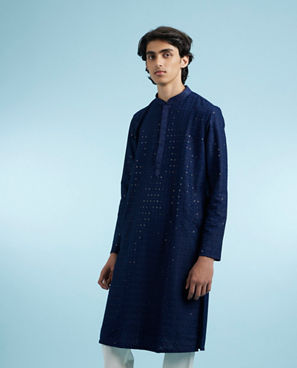
Navy blue sits at the darkest, most authoritative end of the spectrum — a colour that bridges ethnic and contemporary sensibilities, works across all seasons, and carries a formality that lighter blues cannot claim.
The blue cotton kurta range spans this entire spectrum, ensuring there is a shade for every man, every mood, and every occasion.
Occasions Across the Blue Spectrum
The versatility of blue cotton kurtas across occasions is directly related to the shade you choose — and understanding this relationship helps you dress with greater precision and confidence.
Light blue kurtas are ideal for casual family gatherings, daytime outings, and relaxed semi-formal events — the colour is approachable and easy, never demanding too much of its wearer or its setting. Mid-tone blues — cobalt, cornflower, and bright royal blue — work well for festive occasions like Eid, Navratri, and Diwali, where the vibrancy of the colour matches the energy of the event. For weddings as a guest, a deeper royal blue or navy cotton kurta in a slightly richer weave creates a look that is formal enough for the occasion without requiring a heavier fabric. For everyday wear — office casual dress codes, weekend outings, and regular family occasions — any shade of blue cotton works, with the shade chosen based simply on your own mood and preference for the day.
Cotton Varieties That Bring Blue to Life
The texture and weight of the cotton fabric used in a blue kurta has a meaningful impact on how the colour reads and how the garment performs across different settings.
-
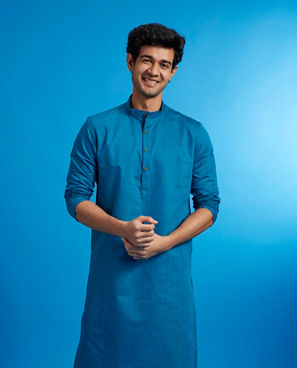
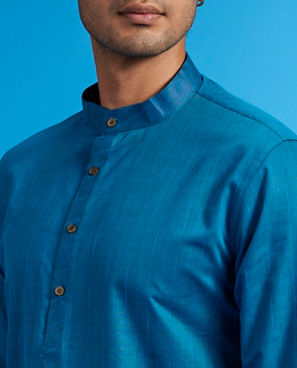
Standard cotton weave produces a clean, matte finish that suits the honest, everyday character of blue perfectly — the colour appears clear and vivid without any competing visual texture.
-
Cotton-linen blends add a slightly rougher, more organic texture that gives blue a more artisanal, considered quality — particularly well-suited to mid-tone and deeper blues where the texture adds visual depth.
-
Mulmul and fine muslin cottons give lighter blues an almost translucent softness — ethereal, delicate, and ideal for summer occasions where the fabric needs to be as light as possible.
-
Dobby cotton — with its subtle woven geometric texture — adds surface interest to solid blue kurtas, creating a visual complexity that makes even a simple colour like blue look more considered and designed.
-
Cotton-silk blends give blue a gentle sheen and a smoother drape, elevating the fabric towards semi-formal territory while retaining the breathability benefits of cotton.
Prints, Embroidery and Surface Detail
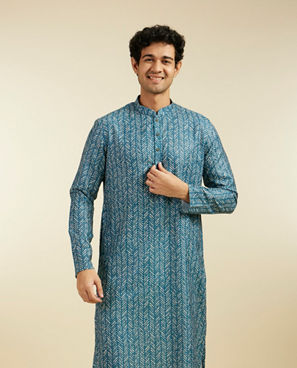
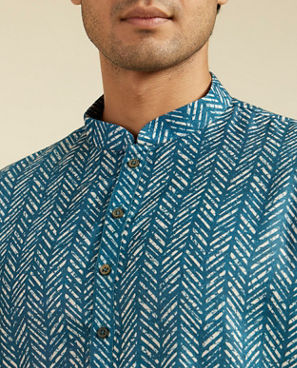
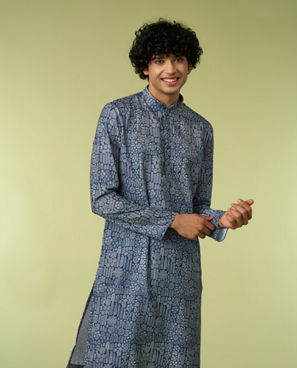
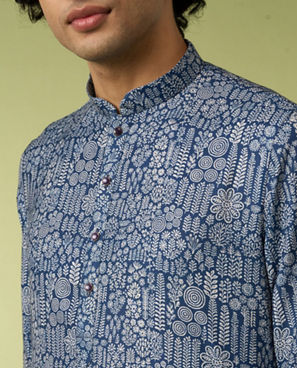
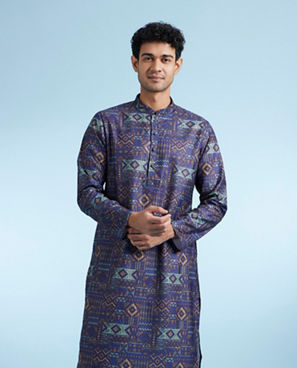
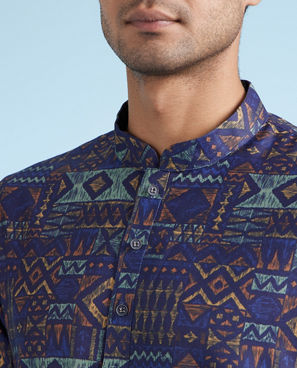
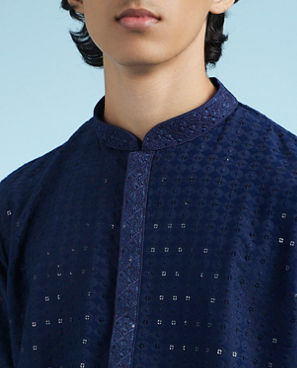
Blue cotton is one of the most receptive base colours for surface detail and embellishment — a quality that makes the range of design options available genuinely exciting. White embroidery or thread work on blue cotton creates a crisp, nautical-inspired contrast that is clean, contemporary, and timeless. Gold thread work on deeper blues — royal or navy — adds a rich, festive quality that elevates the kurta from everyday wear to occasion dressing without changing the silhouette. Block print motifs in white, ochre, or rust on a blue cotton base have a distinctly artisanal, handcrafted quality — the kind of surface detail that connects the garment directly to India's rich printing traditions. Floral digital prints in contrasting colours on a blue cotton base create a bold, contemporary aesthetic that is particularly popular for festive and casual occasions alike. Subtle self-prints — geometric or abstract patterns in a tone close to the base blue — add quiet visual complexity to solid blue kurtas without disrupting the overall clean appearance.
Styling: Combinations That Always Work
Blue cotton's versatility extends powerfully into the realm of styling — it is one of the easiest ethnic colours to build a complete outfit around.
White churidars or straight-cut trousers are the most universally flattering pairing for any shade of blue — the contrast is clean, classic, and always appropriate. Ivory and off-white bottoms offer a warmer version of the same logic, adding a softness that suits earthier or deeper blues particularly well.
For a more contemporary look, light grey trousers pair beautifully with mid-to-deep blues, creating a cool-toned combination that reads sophisticated and fashion-forward. Navy blue kurtas can be paired with lighter blue or white bottoms for a tonal dressing effect, or contrasted with ivory for a clean, formal look.
For footwear, the options are equally broad — white or tan kolhapuris for casual daytime looks, brown or tan leather juttis for semi-formal occasions, and embroidered mojaris for festive events. Accessories in silver complement blue's cool undertones most naturally, though gold works well for warmer, deeper shades like royal blue and navy.
Through Every Season
One of the practical strengths of a cotton kurta is its year-round wearability — a quality that maximises the return on every piece in this colour family. Lightweight cotton and mulmul blue kurtas are natural summer choices — breathable, cool, and fresh in India's intense heat, they remain comfortable across full days of outdoor events and active occasions. Through the monsoon season, cotton's quick-drying properties make it the most sensible ethnic fabric choice, and blue's depth means the colour remains vivid even in overcast, grey-sky lighting conditions. Through autumn and winter, heavier cotton weaves and cotton-blend blue kurtas provide the warmth and structure appropriate for the festive season — particularly in deeper shades like royal blue and navy that suit the richness of the season aesthetically.
A Colour Worth Investing In
Building a small but considered collection of kurtas across different shades is one of the smartest wardrobe strategies available. A light blue kurta for casual and daytime occasions, a mid-tone cobalt or royal blue for festive and semi-formal events, and a deep navy for the most formal ethnic settings together give you a bottom-to-top coverage of the occasion spectrum in a single colour family. These three pieces pair with the same set of neutral bottom wear, the same footwear choices, and the same accessories — making outfit construction simple, fast, and consistently successful. Blue cotton's natural versatility means these kurtas will be among the most frequently worn pieces in your wardrobe, earning their keep across every season and every occasion the year brings.
A Natural on Every Occasion
Blue is one of the most photogenic colours — and in cotton, its photographic qualities are enhanced by the fabric's honest, clean surface. Light blues photograph with a freshness and luminosity in natural light that is immediately appealing — the colour glows rather than bleaches, creating a warmth in outdoor photographs that feels genuinely radiant. Deeper blues read with authority and definition in both natural and artificial light, creating a strong visual presence that anchors group photographs and portrait shots alike.
For festive photography and social media content, blue cotton kurtas create images that are vibrant, well-defined, and culturally resonant — the combination of a colour with such deep Indian textile heritage and a fabric as honest as cotton creates photographs that feel both authentic and considered. Against neutral or contrasting backgrounds, any shade of blue cotton performs with a clarity and confidence that makes every photograph better.
Frequently Asked Question (FAQs)
1. Which shade of blue cotton kurta is most versatile for everyday wear?
Navy blue and mid-tone royal blue are the most versatile shades for everyday ethnic wear — both work across casual and semi-formal settings, pair with a wide range of neutral bottom wear, and remain appropriate across all seasons. For strictly casual everyday wear, lighter shades like sky blue and cornflower blue offer a more relaxed, approachable aesthetic that is equally wearable and easy to style.
2. Can a blue cotton kurta be worn to a wedding function?
Yes. In a deeper shade — royal blue or navy — and in a slightly richer cotton weave or cotton-blend fabric, this kurta is appropriate for certain wedding functions, particularly daytime ceremonies, casual pre-wedding gatherings, and functions with a relaxed dress code. Pair with tailored churidars and a Nehru jacket for added formality. For the most formal wedding occasions, a heavier fabric may be more appropriate.
3. What prints work best on blue cotton kurtas?
White thread work or embroidery creates the most classic contrast on blue cotton. Block print motifs in white, ochre, or rust give blue cotton an artisanal, traditional quality. Digital floral prints in contrasting colours work well for festive and casual occasions. For a cleaner, more contemporary look, subtle self-prints or tonal geometric patterns add visual complexity without disrupting the overall simplicity of the blue base.
4. How do I prevent a blue cotton kurta from fading over time?
Wash in cold water with a colour-safe or dark-fabric detergent to preserve the vibrancy of the blue. Turn the kurta inside out before washing to protect the outer surface from friction-related fading. Dry in shade away from direct sunlight — UV exposure is the primary cause of colour fading in cotton fabrics. Iron on medium heat while slightly damp for best results.
5. Is a blue cotton kurta suitable for summer in India?
Absolutely — and it is one of the best summer ethnic wear choices available. In lightweight cotton, mulmul, or cotton-linen blend variants, the kurtas are breathable, comfortable, and genuinely well-suited to India's warm climate. Lighter shades like powder blue and sky blue are particularly refreshing in summer, both in terms of their visual quality and their psychological association with coolness and ease.

_28-04-2025-06-53:297-368)
_18-04-2025-23-10:297-368)
_28-04-2025-06-53:Swatch)