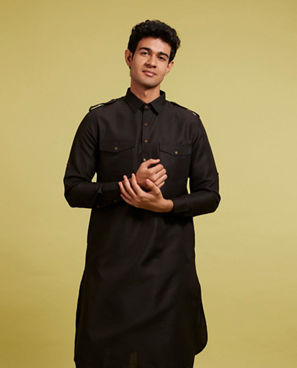
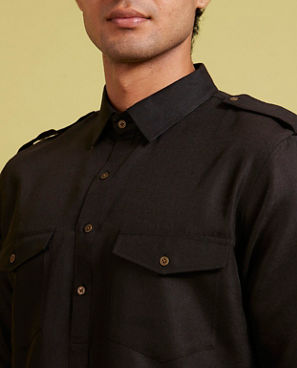
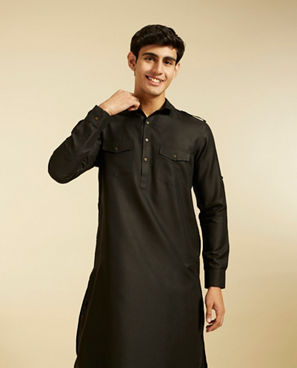
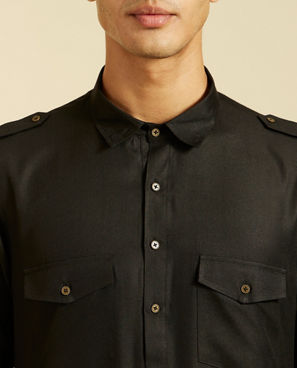
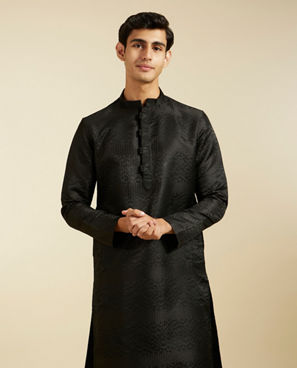
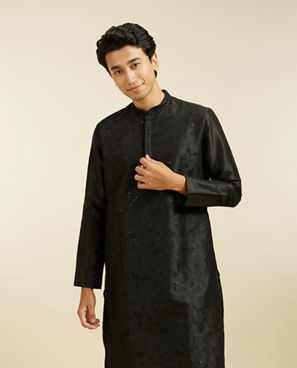
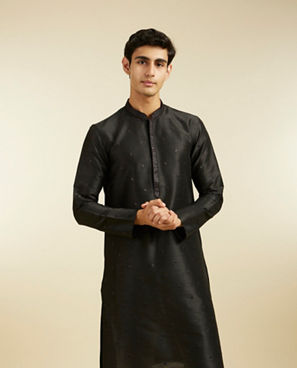
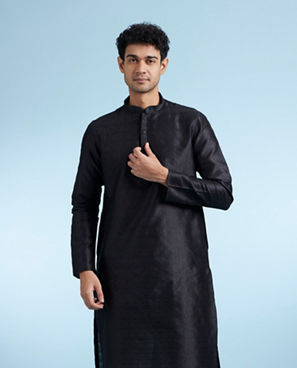
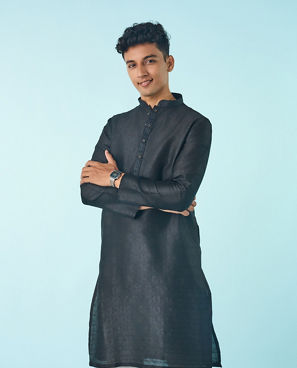
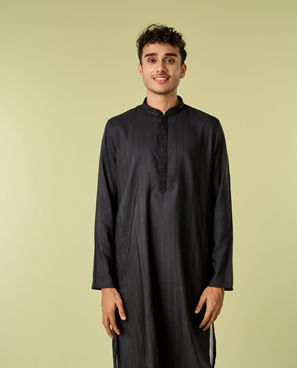
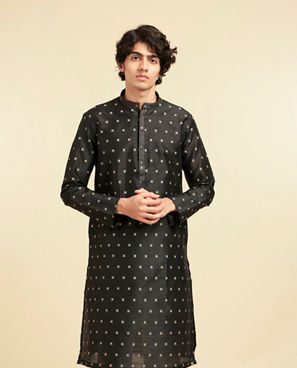
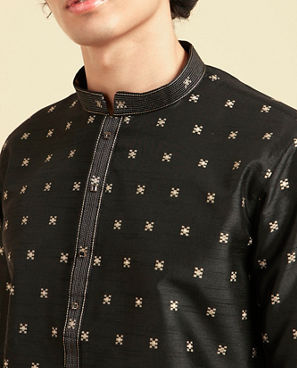
Black Silk Kurtas for Men – The Pinnacle of Festive Authority
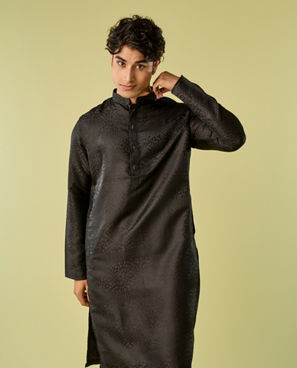
Some combinations in fashion transcend trend and arrive at something closer to permanence. Black silk is one of them. The depth of black and the luminosity of silk exist in a relationship of perfect creative tension — one absorbs light, the other reflects it, and together they create a surface that is simultaneously rich, dynamic, and deeply compelling. In men's wear, a black silk kurta is not simply a festive option — it is a declaration. It communicates taste, confidence, and an understanding of occasion dressing that goes beyond the predictable.
The Physics of Black Silk: Why This Combination Is Extraordinary
Understanding why black silk works so powerfully begins with understanding what each element brings to the other. Black as a colour absorbs light — creating depth, definition, and a visual authority that no other colour quite replicates. Silk as a fabric reflects light — its natural lustre creates highlights, subtle sheen, and a dimensional quality that flat fabrics cannot produce. When these two properties meet in a single garment, the result is a fabric surface that appears to shift and move with the wearer — catching light on raised surfaces, deepening into near-infinite darkness in the recesses of folds and drape. This interplay gives a black silk kurta a visual complexity that is immediately apparent and endlessly interesting — a garment that looks different, and equally extraordinary, in every lighting condition it encounters.
Silk Varieties: Choosing Your Luxury
The word silk encompasses a remarkable range of fabrics, and the variety you choose for a black kurta has a significant impact on the garment's character and occasion-appropriateness.
-
Pure mulberry silk offers the most refined hand and the most luminous finish — the deepest, most richly reflective black available in a kurta fabric. It is the most prestigious option and the most appropriate for the most formal festive occasions.
-
Tussar silk brings a naturally textured surface and a slightly warmer tone to black — the fabric's organic character gives the colour a more earthy, artisanal quality that is distinctive and deeply attractive.
-
Chanderi silk, woven from silk and cotton, offers a lighter, more delicate option — ideal for warmer weather festive occasions where the full weight of pure silk would be uncomfortable.
-
Silk-blend fabrics combine the visual appeal of silk with greater breathability and easier maintenance — a practical option that sacrifices very little in terms of appearance.
-
Banarasi silk, with its characteristic woven motifs and gold or silver zari work, creates a black kurta of extraordinary richness and festive grandeur — a choice reserved for the most significant celebrations.
When the Occasion Calls for it
A black silk kurta knows its occasions — and it performs in all of them with complete authority. Wedding functions are its most natural domain: as a wedding guest or family member, this kurta signals that you have dressed for the moment with genuine seriousness and style.
For reception evenings, where the atmosphere is formal and the photographs will last a lifetime, black silk delivers a presence that lighter or matte fabrics cannot replicate. Sangeet nights and cocktail functions welcome the drama and richness that black silk brings — the fabric's sheen catches dance floor lighting and event illumination in ways that create genuinely spectacular visual moments.
Diwali parties and festive gatherings benefit from black silk's ability to stand apart from the brighter, more saturated colour choices around it — distinctive without being incongruent. For milestone family celebrations — anniversaries, engagements, and significant birthdays — it communicates the weight of the occasion through the seriousness and quality of the choice itself.
Where Craft Becomes Extraordinary
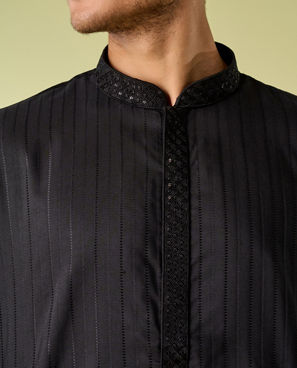
Black silk is perhaps the most powerful canvas available for embellishment in men's ethnic wear — the contrast between the deep, lustrous base and any form of surface detail creates a visual impact of extraordinary intensity.
-
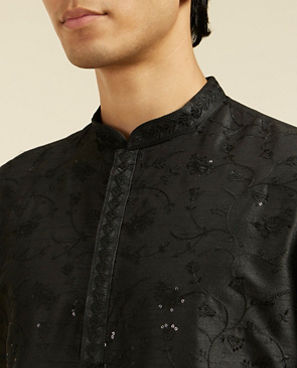
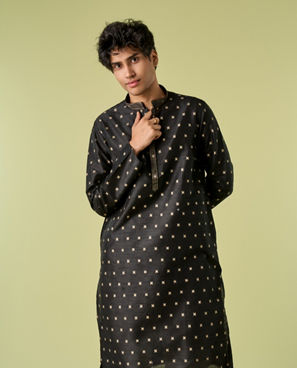
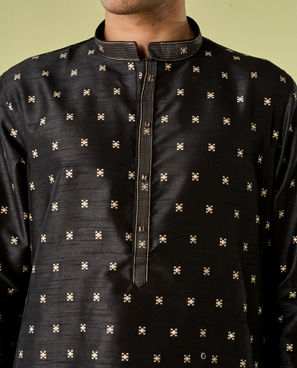
Gold zari embroidery on black silk is one of the most celebrated combinations in Indian festive fashion — the warmth of the gold against the depth of the black creates a richness that is immediately associated with royalty, occasion, and genuine luxury.
-
Silver thread work offers a cooler, more contemporary alternative — the contrast is equally striking but carries a different, more modern energy.
-
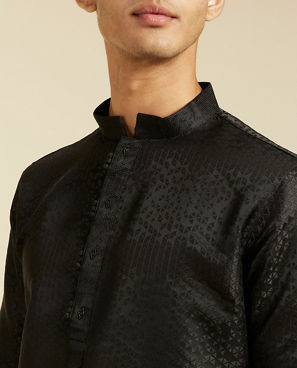
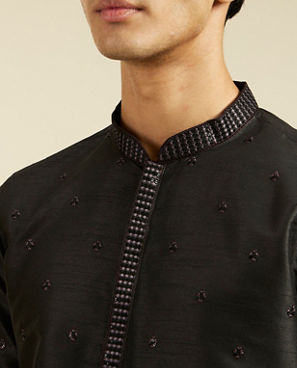
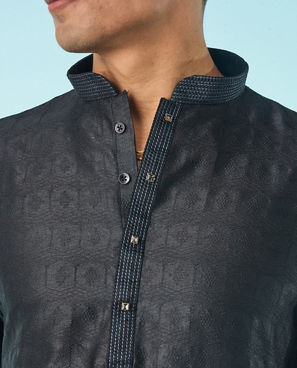
Subtle self-embroidery — where the thread colour is matched closely to the black base — creates a whisper of pattern that is visible only in certain light, adding a layer of craft that rewards close attention without shouting for it.
-
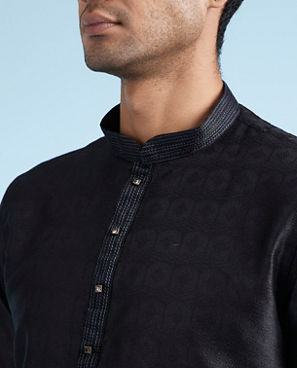
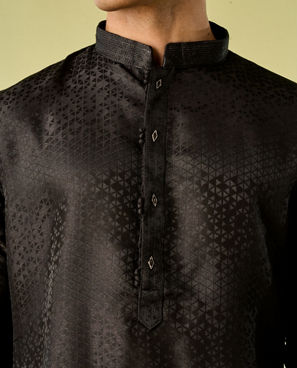
Woven jacquard patterns in the silk itself — paisleys, florals, geometric lattices — add surface texture and depth that is visible in the fabric's own structure, creating a garment of remarkable complexity from what appears to be a single, clean colour.
Styling - Precision Over Complexity
The richness of this kurta means that styling should be precise rather than elaborate — every additional element should be chosen with the same care as the kurta itself.
-
Ivory or cream silk churidars are the most classic and complementary pairing — the contrast between the deep black and the warm ivory creates a look of timeless, occasion-appropriate elegance.
-
Off-white straight-cut trousers offer a slightly more relaxed silhouette while maintaining the same tonal logic.
-
For those who prefer a more monochromatic approach, dark charcoal or near-black trousers create a tonal dressing effect that reads as deeply sophisticated and fashion-forward.
-
Layering with a Nehru jacket or bandhgala elevates the formality of the look further — choose ivory, champagne, or deep gold for a classic pairing, or a matching black jacket for a powerfully unified formal ensemble.
-
Footwear in black, dark brown, or gold embroidered juttis all work beautifully. Accessories in gold or silver — a bracelet, a classic watch, or simple cufflinks — complete the look with the restraint that the fabric's own richness demands.
Across Skin Tones: Universal and Striking
One of its most remarkable qualities is how generously it performs across every skin tone in the spectrum. On deeper complexions, the combination of black's depth and silk's sheen creates a look of extraordinary power — the contrast between the fabric and the skin is striking and commanding, projecting a presence that is genuinely difficult to ignore. On medium and olive skin tones, black silk sits with a clean authority and warmth — the fabric's lustre adds a richness that enhances the overall appearance without competing with the skin's natural character. On fairer complexions, black silk creates a high-contrast, dramatically elegant look — the fabric's reflective quality softens the starkness of the colour and prevents it from feeling harsh. Across all skin tones, the silk's sheen acts as a moderating quality — adding light and dimension to a colour that in matte fabrics can sometimes feel flat or heavy.
The Wardrobe Logic
A black silk kurta earns its place in a well-considered ethnic wardrobe through a combination of occasion versatility, styling flexibility, and genuine longevity. Unlike trend-driven festive pieces that feel dated within a few seasons, it is perennially appropriate — it will look as relevant and as well-considered five years from now as it does today. Because of its neutral colour, it pairs with a wider range of bottom wear, layering pieces, and accessories than almost any other festive kurta in the wardrobe. A single well-made kurta can serve multiple wedding seasons, multiple festive occasions, and multiple styling directions — making the investment in quality fabric and construction one of the most rational decisions in ethnic wardrobe building. This is a piece you buy once, wear repeatedly, and never regret.
Drama That the Camera Understands
Few garments perform on camera with the authority of a black silk kurta — and the reasons are rooted in the science of how the fabric interacts with light in photographic conditions. Silk's natural lustre creates highlights and reflections that give the garment a three-dimensional depth in photographs — a quality that transforms what might otherwise be a flat, dark mass into a richly textured, visually compelling surface. In the warm, soft lighting typical of wedding and festive event photography, black silk absorbs the warm tones of the light and reflects them back subtly — creating a depth in the image that feels luxurious and considered. For portrait photography, it provides a powerful, clean backdrop for the face — the fabric's richness frames the subject with an authority that lighter fabrics cannot match. In group photographs, black silk creates a visual anchor — grounding the image with a depth and presence that makes the overall composition more dynamic and interesting.
Frequently Asked Questions (FAQs)
1. Is a black silk kurta appropriate for Indian wedding functions?
Absolutely. It is an excellent choice for wedding functions — particularly reception evenings, sangeet nights, and cocktail functions where the atmosphere calls for formal festive dressing. Paired with ivory churidars and a structured Nehru jacket, it creates a look of complete, occasion-appropriate elegance. While some traditional contexts may prefer lighter colours for wedding occasions, black silk is widely accepted and deeply respected as a festive choice in contemporary Indian celebrations.
2. What is the best way to style a black silk kurta for a wedding reception?
For a wedding reception, pair it ideally with gold zari embroidery or a woven jacquard pattern — with ivory or cream silk churidars. Add a champagne or ivory Nehru jacket for additional formality, and choose embroidered gold juttis or classic dark leather footwear. Keep accessories in gold — a bracelet and a quality watch are sufficient. The overall look should be polished, restrained, and deeply considered.
3. How does a black silk kurta differ from a black cotton kurta in terms of occasion-appropriateness?
It is significantly more formal and festive in character — the fabric's lustre, drape, and richness make it appropriate for wedding functions, reception evenings, and formal celebrations. A black cotton kurta is more versatile across casual to semi-formal settings — breathable, practical, and easy to maintain. For the most formal ethnic occasions, silk is the appropriate choice; for everyday and semi-formal settings, cotton is more practical and equally well-considered.
4. Can a black silk kurta be worn without embellishment for a formal occasion?
Yes. A well-cut kurta in a quality fabric — particularly one with a self-woven jacquard pattern or subtle surface texture — is entirely sufficient for formal festive occasions without additional embellishment. The fabric's natural richness and the colour's inherent authority create a look of complete formal elegance. Minimal embellishment is often more powerful than excessive decoration on a fabric as expressive as black silk.
5. How do I care for a black silk kurta to preserve its colour and lustre?
Dry cleaning is the safest and most effective care method for silk kurtas — it preserves both the fabric's integrity and the depth of the black colour. If hand washing, use cold water with a silk-specific mild detergent, handle without wringing, and dry in shade away from direct sunlight. Iron on the reverse side using the lowest heat setting, or use a steamer for best results. Store on a padded hanger away from direct light to prevent colour fading and fabric degradation over time.