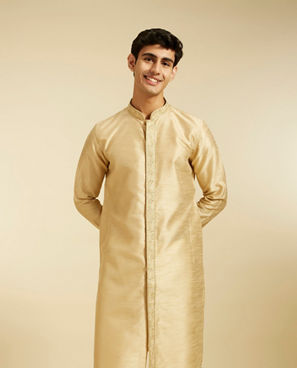
Beige Silk Kurtas for Men – Where Quiet Luxury Meets Timeless Craft
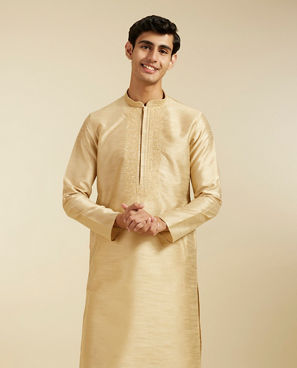
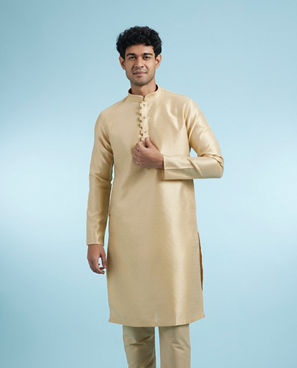
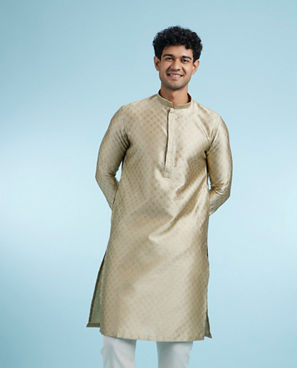
There is a particular kind of confidence that comes from wearing something that does not need to announce itself. A beige silk kurta carries exactly that quality — it does not compete for attention, it commands it. The softness of beige and the natural luminosity of silk create a combination that is simultaneously understated and unmistakably luxurious.
Silk's Relationship With Beige: A Study in Subtle Luxury
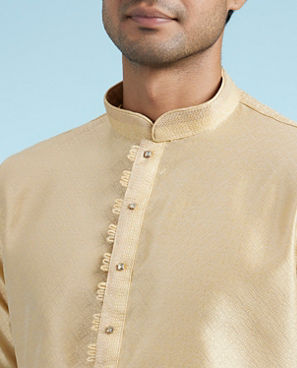
Beige is not a passive color — it is an active choice that requires confidence to wear well. On silk, beige transforms in ways that other fabrics cannot facilitate. The natural lustre of silk gives beige a dimensional warmth — the color shifts subtly between ivory, gold, and cream depending on the light, creating an effect that is alive and dynamic rather than flat. In bright natural light, a beige silk kurta glows with a warm luminosity. In the soft, warm artificial lighting of a wedding reception or festive gathering, it deepens into something richer and more golden. This responsiveness to light is one of silk's most remarkable qualities, and on beige it is particularly compelling — a color that reveals different versions of itself across the course of a single day or evening.
The Silk Varieties Behind the Beige Kurta
Understanding the different silk types available in a beige kurta helps you make a more informed choice based on the occasion and your personal preferences.
-
Pure mulberry silk offers the most refined hand and the most luminous finish — it is the most luxurious option and the most prestigious in terms of Indian textile heritage.
-
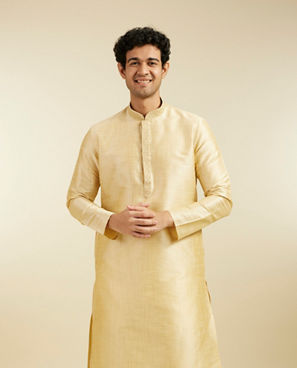
Tussar silk, with its naturally warm, slightly textured surface and characteristic gold undertone, is particularly well-suited to beige — the fabric's organic quality enhances the color's earthy warmth and gives the kurta a more artisanal, handcrafted character.
-
Chanderi silk, woven from a combination of silk and cotton, offers a delicate, lightweight option that is ideal for warmer weather and daytime festive occasions — the fabric's slight transparency gives beige a refined, ethereal quality.
-
Silk-blend fabrics combine the visual appeal of silk with the practicality of other fibres, offering a more breathable, easier-to-maintain option without significantly compromising on appearance.
Each of these varieties brings a distinct character to beige — the choice depends on the occasion, the season, and how formal you want the look to feel.
When to Reach for it
A beige silk kurta occupies the upper end of the ethnic occasion spectrum — it is a piece that knows where it belongs and performs best in those settings.
-
Wedding functions are its most natural home: as a wedding guest, this kurta paired with cream churidars and a structured Nehru jacket creates a look of quiet distinction that stands apart from the more saturated color choices around you without appearing underdressed.
-
For Eid celebrations, the combination of beige and silk carries a celebratory elegance that is entirely appropriate for the occasion — festive in feel, refined in execution.
-
Diwali parties and festive gatherings benefit from the warm, golden quality that silk lends to beige — the color seems to absorb and reflect the warmth of the season itself.
-
For engagement ceremonies, anniversary celebrations, and other milestone family occasions, it is a confident, considered choice that communicates taste and intention without the formality of heavier embellishment.
Surface Detail and Design: Elevating the Beige Silk Base
The richness of a beige silk base creates an excellent canvas for subtle surface detail and design elements that might be lost on a matte or less lustrous fabric.
-
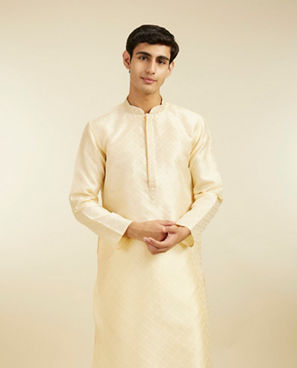
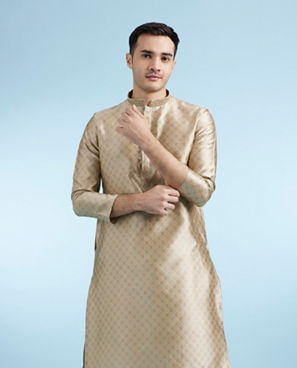
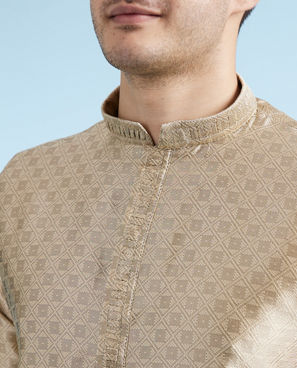
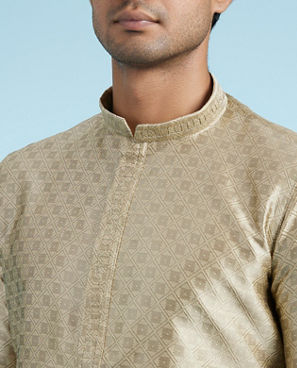
Self-woven jacquard patterns — paisleys, florals, and geometric lattices woven directly into the silk — add depth and texture to the fabric without introducing a contrasting color, maintaining the purity of the beige palette while making the surface more visually complex and interesting.
-
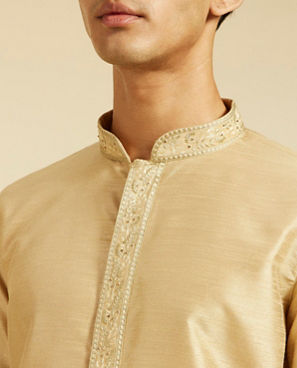
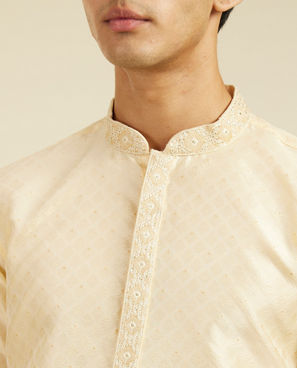
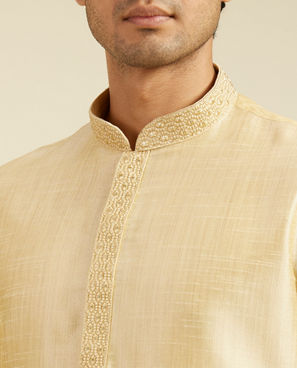
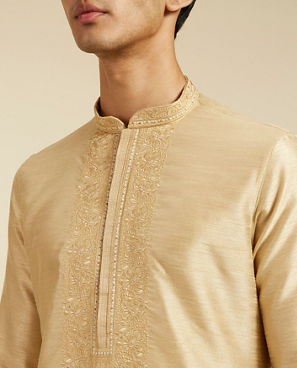
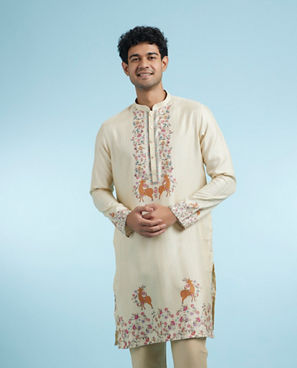
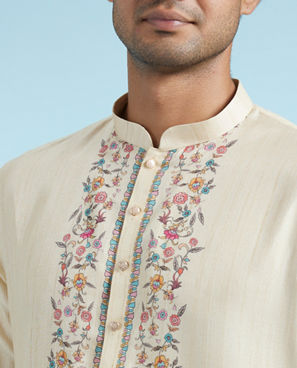
Gold or ivory thread work embroidery along the neckline, placket, and cuffs brings a festive formality to the kurta that is perfectly calibrated for wedding and celebration occasions — enough embellishment to signal the occasion, restrained enough to maintain the overall elegance.
-
Tone-on-tone embroidery — where the thread color matches the base fabric closely — creates a whisper of pattern that is visible only on close inspection, adding a layer of craft that rewards attention without announcing itself.
Each of these design approaches serves the beige silk combination differently — the choice depends on how much presence you want the kurta to carry.
Building the Complete Look: Styling Beige Silk
Styling a kurta is about building an outfit that honours the fabric's natural elegance without overcomplicating it.
-
The most refined approach is tonal dressing — pairing the kurta with ivory, cream, or off-white silk churidars for a cohesive monochromatic look that reads as intentional and sophisticated.
-
The slight variation in shade between the kurta and the churidars adds visual dimension without breaking the palette's unity.
-
For a clean contrast, white straight-cut trousers create a crisp, well-defined look that is particularly effective for daytime functions.
-
If you choose to layer — and for formal wedding occasions, a Nehru jacket or bandhgala is an excellent addition — opt for ivory, champagne, or a warm gold tone that complements rather than competes with the base.
-
For footwear, tan or caramel embroidered juttis, natural leather mojaris, or classic Kolhapuri sandals in warm tones all work beautifully.
-
Accessories in matte gold — a bracelet, a simple chain, or a pocket square in ivory — complete the look with understated refinement.
Across Skin Tones and Seasons
Beige silk is one of the most generously flattering combinations in men's wear — and its appeal spans both the full range of skin tones and the full calendar of festive occasions.
On deeper complexions, the warmth of beige and the luminosity of silk create a striking contrast that is immediately elegant — the color's lightness against rich, warm skin tones is quietly dramatic and deeply flattering. On medium and olive complexions, beige sits harmoniously — the fabric's warmth mirrors and enhances the skin's natural undertones, creating an organic cohesion that feels effortless. On fairer complexions, it adds a golden warmth that pure white lacks, giving the overall look a richness and depth that is more interesting and more flattering. Seasonally, beige silk is at its most compelling during the cooler festive and wedding season — from October through February — when the fabric's warmth and the color's depth feel most at home. In lighter silk or chanderi variants, the same color story works beautifully through spring and the warmer months as well.
As a Wardrobe Investment
In a wardrobe built around quality and versatility, this kurta earns its place quickly and holds it indefinitely. Unlike trend-driven colors and styles that cycle in and out of relevance, it is perennially appropriate — it never looks dated, never feels out of place, and never requires significant restyling to remain relevant.
-
A single well-made kurta can serve wedding functions, festive occasions, milestone family events, and formal celebrations across multiple seasons and years.
-
It pairs with a wide range of bottom wear and layering pieces already present in most men's ethnic wardrobes, making it an exceptionally easy piece to integrate. The investment in a quality silk fabric pays returns in longevity, versatility, and the consistent elegance that only a truly well-made garment can deliver.
The Camera and Beige Silk: A Naturally Beautiful Partnership
Beige silk is one of the most photogenic fabric-color combinations in men's wear — and the reasons are rooted in how silk interacts with light in photographs. The fabric's natural lustre creates highlights and subtle reflections that give the garment a three-dimensional depth in images — a quality that flat, matte fabrics simply cannot replicate. In wedding photography particularly, where warm, soft lighting is standard, it absorbs and reflects that warmth in a way that makes the wearer look genuinely radiant. The color's neutrality means it never dominates a group photograph or clashes with other outfits — instead, it provides a calm, elegant anchor that makes the overall image more composed. For portrait photography, this kurta creates images of understated beauty — the kind that look as considered and intentional as the garment itself.
Frequently Asked Quesion (FAQs)
1. How is a beige silk kurta different from a beige Chikankari kurta?
The primary distinction lies in what defines the garment's character. This kurta is defined by the fabric — the lustre, drape, and warmth of silk are its primary qualities, and any embellishment is secondary. A beige Chikankari kurta is defined by the embroidery — the Chikankari craft is the focal point, and the fabric serves as its canvas. Both are excellent choices, but they speak different style languages — silk is about fabric luxury, Chikankari is about embroidery craft.
2. What is the best silk type for a beige kurta for a winter wedding?
For a winter wedding, pure mulberry silk or a heavy silk-blend fabric offers the richest hand and the most luxurious appearance — both appropriate for the formality of the occasion and warm enough for cooler temperatures. Tussar silk is another excellent winter wedding choice, its natural gold undertone adding a warmth that suits both the season and the celebratory occasion beautifully.
3. Can a beige silk kurta be worn without a Nehru jacket for a wedding function?
Absolutely. A well-cut kurta with subtle embellishment — tone-on-tone embroidery or a self-woven jacquard pattern — is entirely sufficient for most wedding functions without requiring additional layering. The fabric's inherent richness and the color's quiet elegance create a complete, occasion-appropriate look on their own. A Nehru jacket is an option for those who want added formality, not a requirement.
4. How do I maintain the lustre of a beige silk kurta over time?
Dry cleaning is the safest and most effective care method for silk kurtas — it preserves both the fabric's integrity and the color's depth. If hand washing, use cold water with a very gentle silk-specific detergent, handle without wringing, and dry in shade away from direct sunlight. Iron on reverse using a low heat setting or steam from a distance. Store on a padded hanger or folded carefully with acid-free tissue paper to prevent permanent crease marks.
5. What accessories work best with a beige silk kurta?
Matte gold accessories complement it most naturally — a simple gold bracelet, a classic timepiece with a leather strap, or understated gold cufflinks all work beautifully. Silver accessories work equally well for a cooler, more contemporary feel. Avoid heavy or ornate jewellery — the fabric's quiet luxury is best served by accessories that echo its restraint rather than compete with it.

_28-04-2025-07-19:297-368)
_18-04-2025-17-31:297-368)
_28-04-2025-07-19:Swatch)
_18-04-2025-17-18:297-368)
_18-04-2025-17-17:297-368)
_18-04-2025-17-18:Swatch)








_12-09-2026-06-21:297-368)
_12-09-2026-06-21:297-368)
_12-09-2026-06-21:Swatch)
_12-09-2026-06-22:Swatch)






_09-06-2026-17-02:Swatch)