Beige Embroidery Kurtas for Men – Where Warmth Meets Craftsmanship
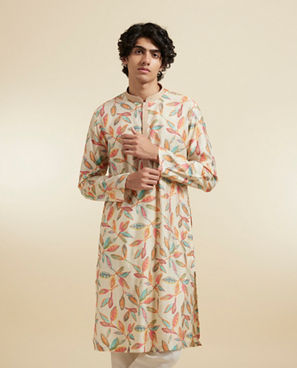
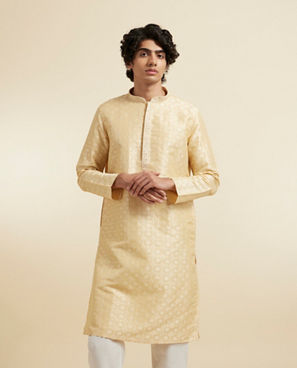
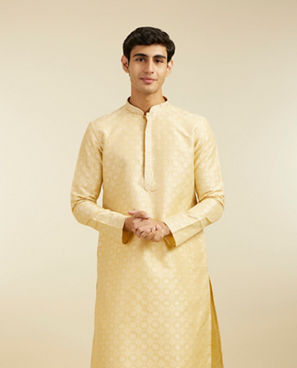
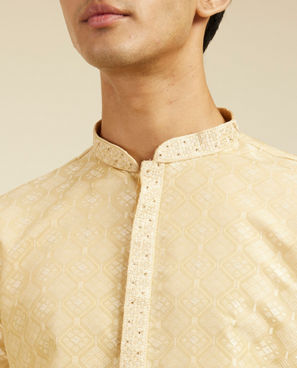
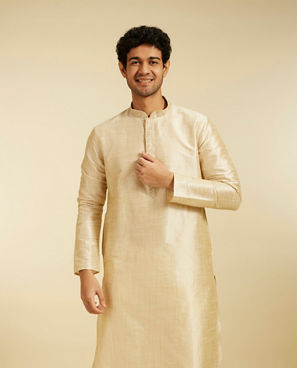
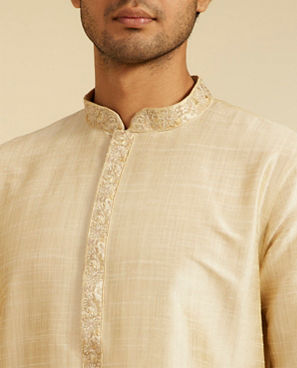
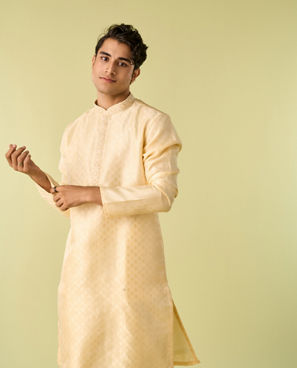
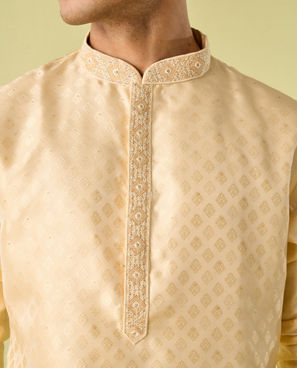
Some garments reveal their quality slowly — and that gradual revelation is precisely what makes them extraordinary. A beige embroidery kurta is exactly this kind of piece. From a distance, it reads as effortlessly understated — a warm, neutral tone that feels immediately refined and considered. Up close, the embroidery emerges: intricate, detailed, patient work that transforms the fabric surface into something that carries genuine artistic merit. This interplay between the apparent simplicity of beige and the quiet complexity of embroidery is what gives the beige embroidery kurta its particular power. It is a garment that rewards attention without demanding it — the very definition of understated luxury.
Beige as an Embroidery Canvas: Understanding the Relationship
The success of a beige embroidery kurta begins with understanding what beige brings to the relationship between colour and craft. Beige is a warm neutral — it carries the softness of white without its starkness, and the earthiness of brown without its weight. On this base, embroidery behaves differently than it does on brighter or darker colours.
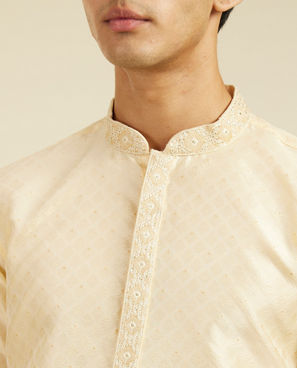
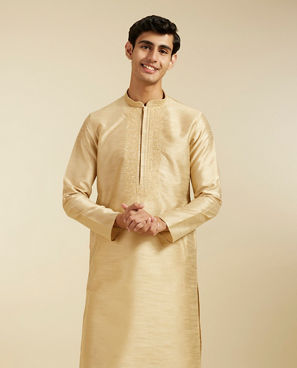
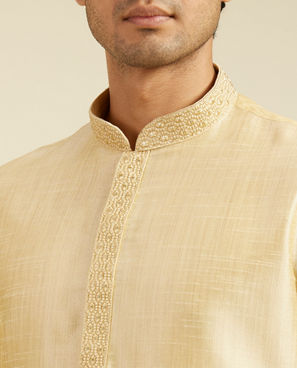
White and ivory thread work on beige creates a tonal, near-monochromatic effect — the embroidery visible primarily through texture and shadow rather than colour contrast, creating a surface of extraordinary refinement.
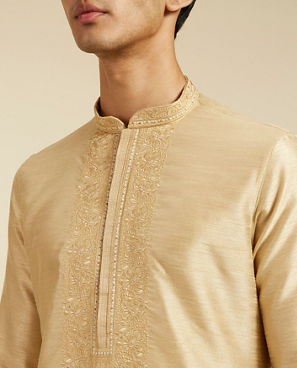
Gold embroidery on beige creates a harmonious warmth — the two tones sharing a yellow-gold undertone that makes the combination feel cohesive and deeply luxurious. Silver thread work on beige introduces a cooler, more contemporary contrast — the metallic silver against the warm neutral creates an elegant tension that is sophisticated and distinctly modern.
Each thread colour behaves uniquely on beige — and each creates a different version of the same fundamental quality: understated excellence.
The Embroidery Techniques That Define This Collection
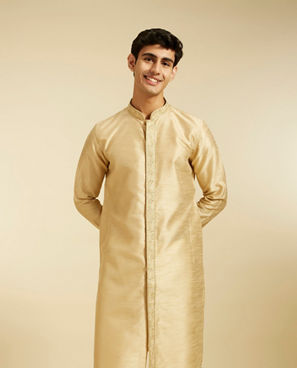
The range of embroidery techniques employed across the Diwas beige embroidery kurta collection is a reflection of the breadth and depth of India's craft heritage.
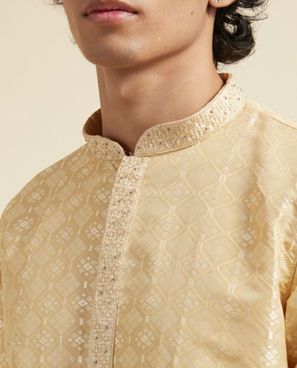
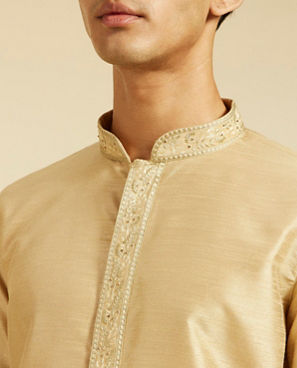
Zari embroidery — using metallic gold or silver threads in intricate repetitive patterns — is among the most celebrated techniques on a beige base, where the warmth of the gold zari finds a natural partner in the warmth of the beige fabric. The contrast is harmonious rather than stark, creating a festive richness that feels neither aggressive nor understated.
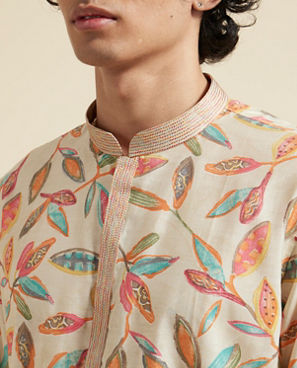
Resham embroidery uses lustrous silk threads to create smooth, fluid designs — florals, paisleys, and botanical motifs that sit on the beige surface with a softness and organic beauty that is immediately appealing.
Chikankari-inspired thread work — with its characteristic delicate stitching, shadow work, and jali patterns — finds perhaps its most natural home on beige, the warm neutral base echoing the traditional white-on-white aesthetic while adding the depth that pure white lacks.
Tone-on-tone embroidery in threads closely matched to the beige base creates whispered patterns visible only in certain light — a layer of craft that is the exclusive domain of the genuinely attentive.
Navigating the Beige Spectrum in Embroidery Kurtas
Beige is not a single shade — it is a warm neutral family with considerable internal range, and the specific tone of beige you choose for an embroidery kurta shapes its character meaningfully.
-
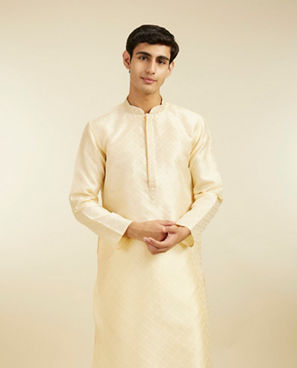
Ivory and cream beige sit closest to white — these lighter tones give embroidery kurtas a freshness and luminosity that suits daytime occasions and spring festive events. The embroidery on these lighter bases tends to read with a clean clarity that suits intricate, fine thread work particularly well.
-
Warm sand and camel beige sit in the mid-range — these tones carry the most quintessentially beige character, with a golden warmth that is deeply flattering across skin tones and works beautifully across both casual and festive settings.
-
Deep tan and raw linen beige sit at the earthier end of the spectrum — these tones give embroidery kurtas a more grounded, artisanal quality that suits block print-inspired embroidery and heritage craft motifs particularly well
The Diwas beige embroidery range covers this full tonal spectrum, ensuring there is a shade and embroidery combination that feels precisely right for every man and every occasion.
When to Wear
The beige embroidery kurta's versatility across occasions is one of its most significant strengths — and it is a versatility that stems from the intelligent pairing of a universally appropriate colour with a universally respected craft.
For casual occasions — family gatherings, religious events, and relaxed social settings — a lightweight cotton kurta with subtle thread work is effortlessly well-dressed without any formality. For semi-formal events — cultural gatherings, office celebrations, and engagement parties as a guest — the embroidery detail elevates the beige kurta into considered, occasion-appropriate territory with ease.
For festive occasions like Eid and Diwali, a kurta in chanderi or silk-blend with gold zari work creates a look of quiet festive elegance that is genuinely distinctive — different from the saturated colour choices that dominate most celebrations, and precisely because of that difference, more memorable.
For wedding functions — mehndi, sangeet, and reception — It is a sophisticated choice that communicates taste and cultural awareness in equal measure.
Fabrics That Honour the Embroidery on Beige
The fabric beneath the embroidery is as important as the embroidery itself — it determines how the stitching sits on the surface, how the colour reads in different lighting, and how comfortable the garment is to wear across a full occasion.
Cotton provides a firm, stable base for embroidery on beige — the matte surface allows thread colours to read with maximum clarity, and the fabric's natural texture gives handcrafted embroidery an honest, artisanal quality that suits traditional techniques like Chikankari and Kantha particularly well.
Chanderi — woven from silk and cotton — adds a gentle sheen to the beige base that gives embroidery a subtle luminosity, making it an excellent choice for festive occasions where a degree of fabric richness is welcome.
Georgette provides a soft, fluid drape on which embroidery sits with a graceful ease — the fabric's movement gives embroidered motifs a gentle dynamism that is particularly effective for floral and botanical designs.
Silk and silk-blend fabrics give kurtas the most luxurious hand and the richest appearance — on silk, beige deepens slightly and the embroidery takes on a heightened visual quality that is appropriate for the most significant festive occasions.
The Palette of Restraint
Beige embroidery kurtas lend themselves most naturally to a styling philosophy of warm tonal restraint — building an outfit within a palette of connected neutrals and warm tones that allows the embroidery to remain the focal point of the entire look.
Ivory or cream churidars are the most classic and complementary pairing — the slight tonal variation between the beige kurta and the ivory churidars adds visual dimension without disrupting the palette's warmth.
Off-white straight-cut trousers work equally well for a more relaxed, contemporary silhouette. For a clean contrast, white bottoms create a fresh, well-defined pairing that suits daytime occasions and semi-formal events where brightness is appropriate.
Camel or warm sand trousers create a fully tonal beige ensemble — a monochromatic dressing approach that is modern, sophisticated, and deeply intentional. For footwear, tan leather juttis, caramel mojaris, or natural woven Kolhapuri sandals are the most organic pairings with beige — the warm brown leather tones complement the kurta's earthy warmth naturally.
Accessories in matte gold — a simple bracelet, a leather-strap watch, or understated cufflinks — are the most harmonious complement to beige’s warm, crafted character.
A Generous and Flattering Combination
These kurtas work across the full range of skin tones with a warmth and generosity that is one of the colour's most underappreciated qualities.
On deeper complexions, the warm neutrality of beige creates a soft, luminous contrast — not the stark high contrast of white or the dramatic depth of dark colours, but a gentle, flattering juxtaposition that is elegant and refined. The gold embroidery on deeper skin tones registers with a warmth and richness that is particularly striking.
On medium and olive complexions, beige sits in absolute harmony — the colour's warmth mirrors and enhances the skin's own golden and olive undertones, creating an organic cohesion that requires very little effort to achieve.
On fairer complexions, beige adds a warmth and depth that pure white lacks, giving the overall look a richness and intention that makes it feel more considered and more interesting.
Across every complexion, the embroidery adds the dimension and craft detail that elevates the overall appearance beyond what the colour alone could achieve.
The Camera Angle: Warmth, Texture and Natural Beauty
Beige embroidery kurtas have a photographic quality that is quietly spectacular — and it is rooted in the way warm neutral tones interact with light in photographic conditions.
Beige absorbs and reflects warm light with a golden quality that makes the wearer appear genuinely luminous in photographs — particularly in the natural light of outdoor events and the warm artificial lighting of indoor celebrations.
The embroidery creates surface texture and detail that the camera reads with a depth and dimensionality that flat fabrics cannot replicate — each stitch casting a micro-shadow, each thread catching a highlight, together creating a surface of genuine photographic richness. For wedding photography and festive event documentation, a kurta creates images of natural warmth and considered beauty — the kind of photographs that look as intentional and beautiful as the garment itself. For social media content and portrait photography, the combination of beige's warmth and embroidery's craft creates a visual quality that is immediately distinctive and consistently admired.
FAQs
1. What occasions is a beige embroidery kurta most suited for?
This kurta is suited to a remarkably broad range of occasions. In lightweight cotton with subtle thread work, it works beautifully for casual family gatherings, religious events, and relaxed semi-formal settings. In chanderi or silk-blend with gold zari embroidery, it is appropriate for Eid, Diwali, wedding functions, and significant festive celebrations. Its warmth and neutrality make it one of the most versatile embroidery kurta choices available.
2. What is the difference between a beige embroidery kurta and a beige Chikankari kurta?
A beige Chikankari kurta is defined specifically by the Chikankari embroidery tradition — a centuries-old craft from Lucknow characterised by delicate white thread work and over thirty distinct stitch types. A beige embroidery kurta is a broader category that encompasses multiple embroidery traditions and techniques — zari, resham, thread work, self-embroidery — giving it a wider range of design expressions and occasion-appropriateness. Chikankari is one specific and celebrated form within the larger embroidery kurta family.
3. Which embroidery thread colour works best on beige?
Gold thread work creates the most harmonious and luxurious combination on beige — the warmth of both tones creates a cohesive, deeply flattering pairing. Ivory and white thread work produces a refined, tonal effect that is particularly elegant on lighter beige bases. Silver embroidery introduces a cooler, more contemporary contrast that works well on mid and deeper beige tones for evening and festive occasions.
4. Can a beige embroidery kurta be worn to a wedding without appearing underdressed?
Absolutely. This kurta in a rich fabric — chanderi silk, silk-blend, or jacquard — with quality gold or silver zari work, paired with ivory churidars and a structured Nehru jacket, creates a look of complete festive elegance. The combination of fabric quality and embroidery craft communicates occasion-appropriate dressing with a sophistication that many more heavily embellished or saturated colour choices cannot match.
5. How should I care for a beige embroidery kurta to preserve both the colour and the craft?
Dry cleaning is the recommended care method — it preserves the fabric's warmth, the colour's depth, and the embroidery's integrity simultaneously. If hand washing, use cold water with a mild detergent, handle gently without wringing or scrubbing, and dry flat in shade. Avoid direct sunlight, which can both fade the beige tone and weaken embroidery threads over time. Iron on reverse or with a pressing cloth over the embroidery, using the lowest appropriate heat setting for the fabric type.

_18-04-2025-22-55:297-368)
_18-04-2025-22-55:297-368)
_18-04-2025-22-55:Swatch)
_18-04-2025-17-18:297-368)
_18-04-2025-17-17:297-368)
_18-04-2025-17-18:Swatch)











_09-06-2026-17-49:Swatch)
_09-06-2026-16-09:Swatch)
_25-08-2024-19-46:297-368)
_25-08-2024-19-45:297-368)
_25-08-2024-19-46:Swatch)